Skip to main content Skip to main navigation menu Skip to site footer
  • Register
  • Login
  • Language
    • Čeština
    • Deutsch
    • English
    • Español (España)
    • Français (France)
    • Français (Canada)
    • Hrvatski
    • Italiano
    • Język Polski
    • Srpski
    • Українська
  • Menu
  • Home
  • Current
  • Archives
  • About
    • About the Journal
    • Submissions
    • Editorial Team
    • Privacy Statement
    • Contact
  • Register
  • Login
  • Language:
  • Čeština
  • Deutsch
  • English
  • Español (España)
  • Français (France)
  • Français (Canada)
  • Hrvatski
  • Italiano
  • Język Polski
  • Srpski
  • Українська

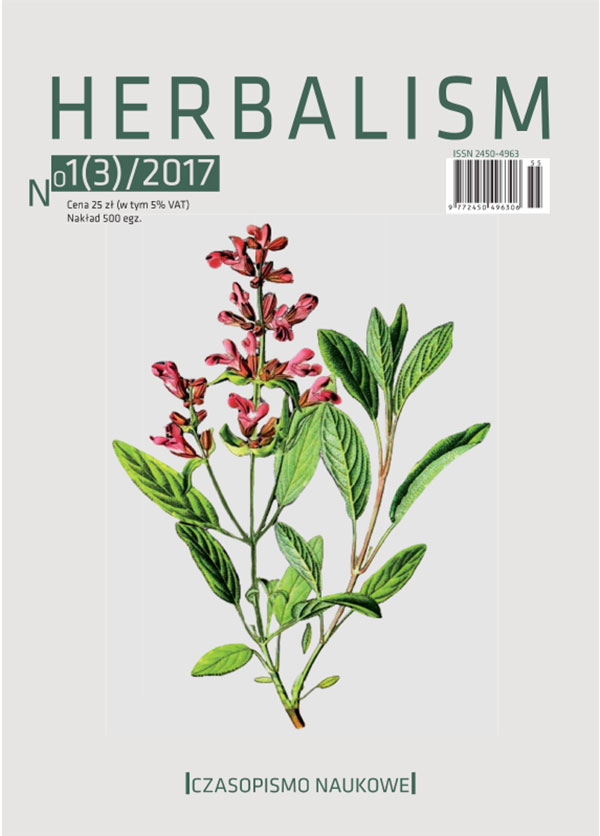
HERBALISM

Phytotherapy of posttreatment Lyme disease syndrome
  • Home
  • /
  • Phytotherapy of posttreatment Lyme disease syndrome
  1. Home /
  2. Archives /
  3. Vol. 3 No. 1 (2017): HERBALISM /
  4. Artykuły

Phytotherapy of posttreatment Lyme disease syndrome

Authors

  • Przemysław Figura Uniwersytet Medyczny w Poznaniu

DOI:

https://doi.org/10.12775/HERB.2017.012

Keywords

lyme disease, phytotherapy, posttreatment Lyme disease syndrome

Abstract

The recognized standard in Lyme disease treatment is antibiotic therapy, both in monotherapy or in combination. This approach is fairly effective in the early stages of the disease. In up to 1/3 of the patients treated, Lyme disease symptoms remain; which is diagnosed as PTLDS. The cause of PTLDS is considered to be pathophysiological damage after the disease or a chronic infection of B. burfgerdori (Bb) sensu lato remaining in oval forms and protected by biofilm. Standard antibiotic Lyme treatment is ineffective in PTLDS, as well as extended treatments. Therefore, it seems reasonable to look for new compounds that can aid treatment. An interesting direction seems to be the study of phytochemical compounds and plant extracts. A review of the studies indicates that some of them, such as Stevia extract, Baikalin are highly effective against Bb in monotherapy and in combination therapy with antibiotics. Buhner’s phytotherapy will also be discussed.

HERBALISM

Downloads

  • PDF (Język Polski)

The publisher's shop:

Go to shop

Published

2021-10-18

How to Cite

1.
FIGURA, Przemysław. Phytotherapy of posttreatment Lyme disease syndrome. HERBALISM. Online. 18 October 2021. Vol. 3, no. 1, pp. 137-149. [Accessed 12 December 2025]. DOI 10.12775/HERB.2017.012.
  • ISO 690
  • ACM
  • ACS
  • APA
  • ABNT
  • Chicago
  • Harvard
  • IEEE
  • MLA
  • Turabian
  • Vancouver
Download Citation
  • Endnote/Zotero/Mendeley (RIS)
  • BibTeX

Issue

Vol. 3 No. 1 (2017): HERBALISM

Section

Artykuły

License

Creative Commons License

This work is licensed under a Creative Commons Attribution-NoDerivatives 4.0 International License.

Stats

Number of views and downloads: 1691
Number of citations: 0

Search

Search

Browse

  • Browse Author Index
  • Issue archive

User

User

Current Issue

  • Atom logo
  • RSS2 logo
  • RSS1 logo

Information

  • For Readers
  • For Authors
  • For Librarians

Newsletter

Subscribe Unsubscribe

Language

  • Čeština
  • Deutsch
  • English
  • Español (España)
  • Français (France)
  • Français (Canada)
  • Hrvatski
  • Italiano
  • Język Polski
  • Srpski
  • Українська

Tags

Search using one of provided tags:

lyme disease, phytotherapy, posttreatment Lyme disease syndrome
Up

Akademicka Platforma Czasopism

Najlepsze czasopisma naukowe i akademickie w jednym miejscu

apcz.umk.pl

Partners

  • Akademia Ignatianum w Krakowie
  • Akademickie Towarzystwo Andragogiczne
  • Fundacja Copernicus na rzecz Rozwoju Badań Naukowych
  • Instytut Historii im. Tadeusza Manteuffla Polskiej Akademii Nauk
  • Instytut Kultur Śródziemnomorskich i Orientalnych PAN
  • Instytut Tomistyczny
  • Karmelitański Instytut Duchowości w Krakowie
  • Ministerstwo Kultury i Dziedzictwa Narodowego
  • Państwowa Akademia Nauk Stosowanych w Krośnie
  • Państwowa Akademia Nauk Stosowanych we Włocławku
  • Państwowa Wyższa Szkoła Zawodowa im. Stanisława Pigonia w Krośnie
  • Polska Fundacja Przemysłu Kosmicznego
  • Polskie Towarzystwo Ekonomiczne
  • Polskie Towarzystwo Ludoznawcze
  • Towarzystwo Miłośników Torunia
  • Towarzystwo Naukowe w Toruniu
  • Uniwersytet im. Adama Mickiewicza w Poznaniu
  • Uniwersytet Komisji Edukacji Narodowej w Krakowie
  • Uniwersytet Mikołaja Kopernika
  • Uniwersytet w Białymstoku
  • Uniwersytet Warszawski
  • Wojewódzka Biblioteka Publiczna - Książnica Kopernikańska
  • Wyższe Seminarium Duchowne w Pelplinie / Wydawnictwo Diecezjalne „Bernardinum" w Pelplinie

© 2021- Nicolaus Copernicus University Accessibility statement Shop